Services
AI Automation Consultant
Most AI automation advice stops at a recommendation. We scope, build, deploy, and run the automation with you.
Start with our AI agent. Find your next step.
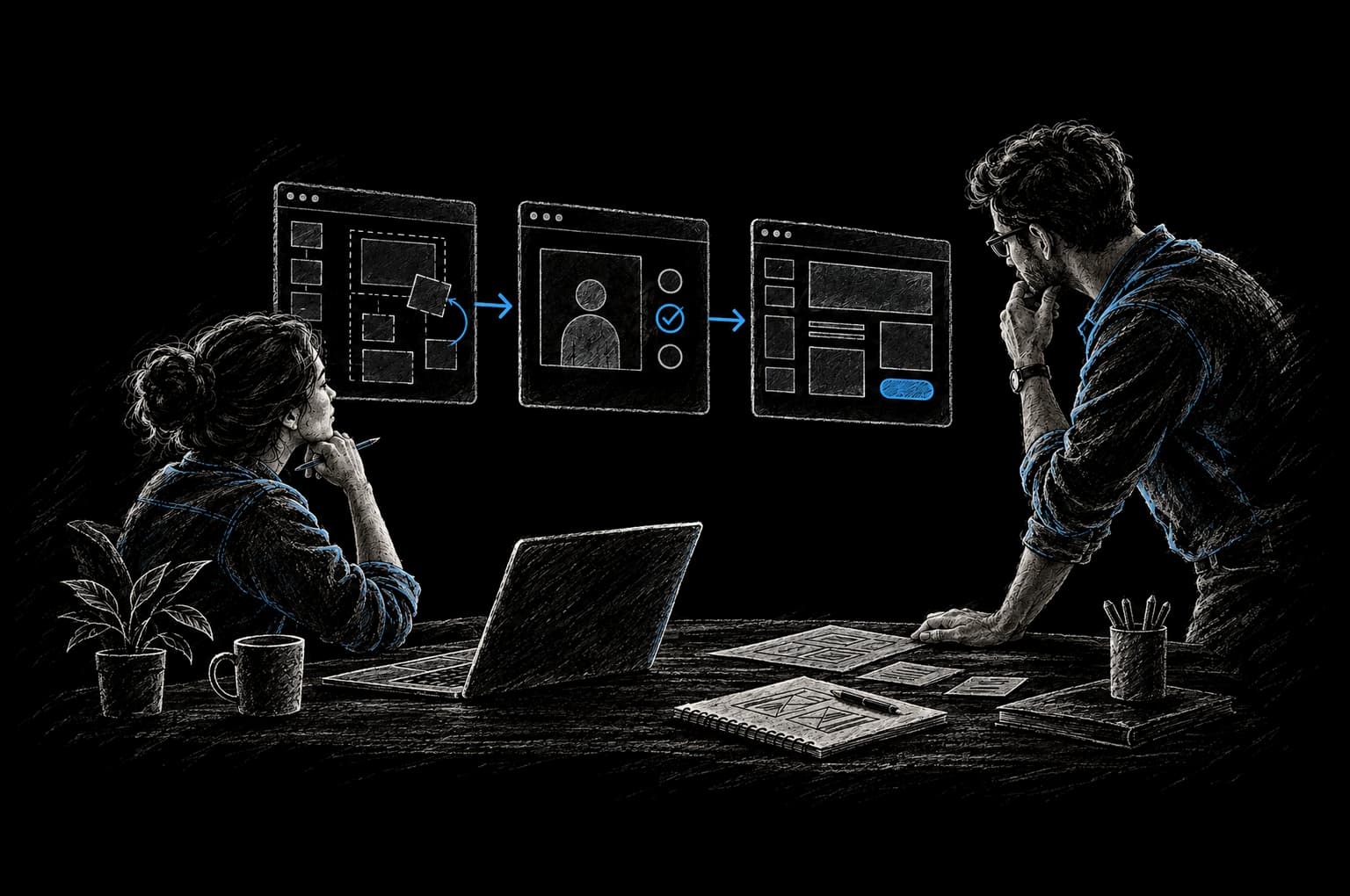
Implementation Partner
We ship the automation
- Diagnose workflow friction
- Build on your infrastructure
- Instrument every action from day one
You are looking for an AI automation consultant because something specific in your business is breaking. Manual data entry is killing your team. Customer responses are taking too long. Reports are being assembled by hand every Monday. You want someone to fix it, not just describe it.
What you actually need is an implementation partner who will ship the automation, not hand you a slide deck and walk away. That is what InTech does.
What an AI automation consultant actually does
An AI automation consultant designs and ships the automation that runs inside a real business workflow. They map where manual work lives, propose where AI agents and automation create leverage, and execute the build through to production. The deliverable is not a recommendation document. It is a working system.
A complete AI automation engagement covers four phases:
- Diagnose: where manual work is concentrated, what data flows underneath, and what governance is required
- Design: which workflows automate cleanly, which need supervised agents, and where humans stay in the loop
- Implement: build the automation on your infrastructure with bounded tool access and approval gates
- Operate: instrument telemetry from day one and iterate based on what works
Most providers stop at Diagnose and Design. The buyer is left holding a deck. That model does not work for AI automation because the recommendation is not the work. The build is the work.
Why "consultant" is the wrong word for what we do
The word "consultant" implies advisory work: meet, scope, recommend, hand off. The traditional model assumes the buyer has an implementation team standing by. Most mid-market companies do not. They have a small operations team, an overbooked technical lead, and a business that needs automation to ship in weeks.
What buyers actually need is implementation: meet, scope, build, ship, operate. One accountable team scopes the work and ships it, and context carries forward from scoping to production. Accountability stays in one place.
InTech is structured as an implementation partner. An Express Pod puts one measurable improvement into production in weeks, with the timeline agreed in the Intent Contract before build starts. The Build Pod is ongoing delivery capacity with a Product Delivery Lead, staffed to the shape of the work and managed against outcomes, and it is configured for multiple workstreams when an engagement spans several workflows or agents. Every Pod engagement ships running systems, not deck-ware.
AI automation services we deliver
Document processing automation extracts data from invoices, contracts, applications, and forms. It classifies document types and routes exceptions to humans.
Customer communication automation drafts email and chat responses using CRM, support history, and order status. The agent drafts, the operator approves, and the system records every step.
Lead routing and qualification automation scores inbound leads, routes them to the right rep, triggers follow-up, and flags leads outside the ICP.
Operations triage and exception routing classifies incoming work, flags anomalies, and routes to the right person.
Reporting and summarization automation pulls data from multiple systems, generates summaries, and alerts teams to anomalies.
Approval workflow automation routes requests through the right chain, collects sign-offs, tracks status, and escalates overdue work.
Custom multi-system AI agent integration connects supervised agents to multiple business systems with bounded tool access, approval gates on consequential writes, and a Telemetry Ledger.
The CRAFT methodology: how we ship automation that stays shipped
The same discipline applies to every engagement. CRAFT (Context, Rationale, Automate, Fortify, Telemetry) is InTech's operating system, the governance underneath strategy, product engineering and managed operations. Pro-Neering is the philosophy behind it: clarity before code, intent before features.
Context maps the workflow first: what work moves through today, what tools touch it, what policies apply, and where tribal knowledge hides the rules nobody wrote down.
Rationale captures the work in an Intent Contract. An Intent Contract is a short, signed-off statement of the outcome, scope, success metrics, constraints, human authority boundaries and acceptance criteria. It is not a legal agreement; commercial terms live in the engagement agreement.
Automate builds the system with bounded tool access and approval gates. Every tool the AI can call is named explicitly.
Fortify adds error handling, rollback paths, exception escalation, and observability.
Telemetry captures every automation action, every human override, and every escalation.
Common AI automation patterns we build
Invoice extraction to finance pipeline. Inbound invoices are classified, validated, written to the accounting system, and routed for exception review.
Lead-to-CRM routing with qualification scoring. Inbound leads are scored on fit, routed to the right rep, and followed up faster.
Support ticket triage with sentiment-based escalation. Inbound tickets are classified by urgency and routed to the right specialist.
Weekly executive summaries from operational data. CRM, finance, project management, and team notes are compiled for leader review.
Contract review with clause classification and human approval. Key clauses are identified, deviations are flagged, and summaries are drafted for review.
How InTech is different from large consultancies, freelancers, and no-code agencies
Large consultancies bring authority and brand. Their engagements often end in a recommendation, and implementation is left to your team.
AI agencies that productize discovery are fast to onboard and fast to exit once the deliverable is a recommendation deck.
Freelance AI automation experts can be useful for narrow tasks, but they are capacity-bound and often do not have a methodology that survives past the principal.
No-code agencies specializing in Make, n8n, or Zapier are fast for tactical wins. They become limited when the workflow needs custom logic, governance layers, supervised agents, or audit trails.
InTech fits when the workflow has policy requirements, custom logic, supervised agents, or audit trail needs the other models cannot ship.
Engagement models: Express Pod and Build Pod
An Express Pod puts one measurable improvement into production in weeks, with the timeline agreed in the Intent Contract before build starts. It is the right fit for one focused automation with clear success metrics. You get the working system, documentation, runbooks, and telemetry.
The Build Pod is ongoing delivery capacity with a Product Delivery Lead, staffed to the shape of the work and managed against outcomes. Commercial terms are agreed per engagement. It is the right fit for ongoing automation development across several workflows. A Product Delivery Lead is accountable for the outcome, managing intent, milestones, and the rhythm of delivery across the engagement.
When AI automation is part of a larger AI Operating System, or when multiple automations and agents coordinate across functions, the Build Pod is configured for multiple workstreams under the same accountability model.
Every configuration runs on your infrastructure: your repositories, your cloud accounts, your data. You own the code, repositories and infrastructure we build for you. What you own at the end of an engagement is set out in your MSA and explained in What You Own and What We Keep.
Once the automation is live, your team can run it, a Build Pod can keep developing it, or InTech Operate can run and improve it as a managed service, with the same evaluations and telemetry. See How we work for the full engagement model.
What you get when InTech is your AI automation partner
You get an Intent Contract, the automation itself, a policy layer with bounded tool access and approval gates, telemetry from day one, documentation, an operator runbook, integration architecture, monitoring setup, and a post-launch review against the acceptance criteria in the Intent Contract.
If you want deeper context, AI Integration Services covers the connective tissue underneath automation and AI workflow automation covers the conceptual depth on what makes automation succeed.
Frequently asked questions
What does an AI automation consultant do?
An AI automation consultant designs and ships the automation that runs inside a real business workflow. They map where manual work lives, propose where AI agents and automation create leverage, and execute the build through to production. The deliverable is not a recommendation document. It is a working system.
How is an AI automation consultant different from an AI implementation consultant?
Different word, often the same role when done right. InTech does both. The consultant work is scoping: a fixed-scope assessment that ends in decisions and a buildable Intent Contract, whether or not you build with us. The implementation work is shipping, and we do not stop after scoping. In an Express Pod or Build Pod engagement, the Intent Contract is signed off before engineering starts, and the system goes live before the engagement closes.
How much does an AI automation consultant cost?
Cost depends on the number of systems and the complexity of the workflow. We scope it after an assessment and give you a clear price before work starts. Express Pods and Build Pods, including multi-workstream configurations, are scoped and quoted for each engagement.
How long does an AI automation engagement take?
Most engagements start with a fixed-scope assessment that picks the first workflow. An Express Pod then puts one measurable improvement into production in weeks, with the timeline agreed in the Intent Contract before build starts. Multi-workflow automation runs as a Build Pod: ongoing delivery capacity with a Product Delivery Lead, staffed to the shape of the work and managed against outcomes, with the timeline for each outcome agreed before work on it starts.
Do we need to use specific tools like Zapier, Make, or n8n?
We use those platforms where they fit. We build custom logic and supervised agents where they do not. The methodology is tool-agnostic. The implementation is not.
Can you help us choose the right AI tools too?
Yes. Tool selection is part of the diagnose-design phase. The recommendation is the start, not the end. Once we agree on tools and architecture, we build the automation on top.
Related: methodology, AI Operating Systems, integration context
From Friction to Proof
Bring us the part that’s getting in the way.
Tell our AI agent what you want to improve. We’ll help you find a useful first step.
Start with our AI agent. Find your next step.